Case study: Merger of tech companies
Initial situation
A medium-sized software developer with an annual turnover of € 130 million and a global reach is merging with an equally large hardware-focused company to strategically expand its service portfolio. Both companies want to open up new markets and benefit from consolidation effects. This will enable both to expand their portfolios and benefit from consolidation effects. Both companies have existing international insurance programs.
While we have adapted our client's insurance program to her needs, the other company is being managed elsewhere. The new joint management now wants to merge the insurance programs and adapt them to the new corporate strategy. This is where we provide support with our customized risk management solutions developed individually for each client.
Challenges
While our customer has primarily developed software to date, the other company primarily offers hardware. Both products are now to be combined in a joint portfolio.
An important challenge was to quickly understand the new risk profile and develop an optimal risk strategy despite the tight timeline and management's focus on many topics at the same time, but also to get to execution quickly so that the new insurance cover was in place for the closing.
Possible risks in the transaction process
Company mergers give rise to various potential liability risks for management, which must be carefully considered:
- Breaches of due diligence: Management must exercise particular care during due diligence. If important risks are overlooked or incorrectly assessed, this can lead to personal liability.
- Duty to provide information: There are extensive duties to provide information to shareholders, the Supervisory Board and other stakeholders. Breaches of these obligations can result in claims for damages.
- Compliance risks: Management must ensure that all regulatory requirements and reporting obligations are complied with in the merger process. Violations can lead to personal liability.
- Conflicts of interest: Management's personal interests must be disclosed. Conflicts of interest that are not made transparent can have consequences under liability law.
These risks can be covered by D&O insurance insurance. A new D&O insurance policy is usually installed as part of the merger. In order to ensure continuous insurance cover, it is important to check whether run-off cover needs to be set up for the old D&O contracts.
The transaction risks themselves can also be insured. We are happy to manage the entire process in combination with M&A insurance policies that primarily cover contractual risks arising from the purchase agreement (W&I insurance) or special balance sheet risks (tax, legal).
Together with our cooperation partner HWF Partners, we ensure that the right protection is installed from day 1 of the transaction.
Solution approach
How we analyzed the risks and existing insurance programs
Based on the internal risk assessment of both companies and the planned measures for the merger, we carried out a comprehensive analysis of the company's current and planned future activities, focusing in particular on liability and cyber risks. Financial loss liability and cyber liability in particular played an important role due to the client's activities and their influence on end customers. However, the focus was also on management risks, which have increased significantly due to the reorganization of the companies and were insured as part of a D&O policy.
In our forward-looking risk assessment, we also considered extreme scenarios and their impact on risk coverage requirements.
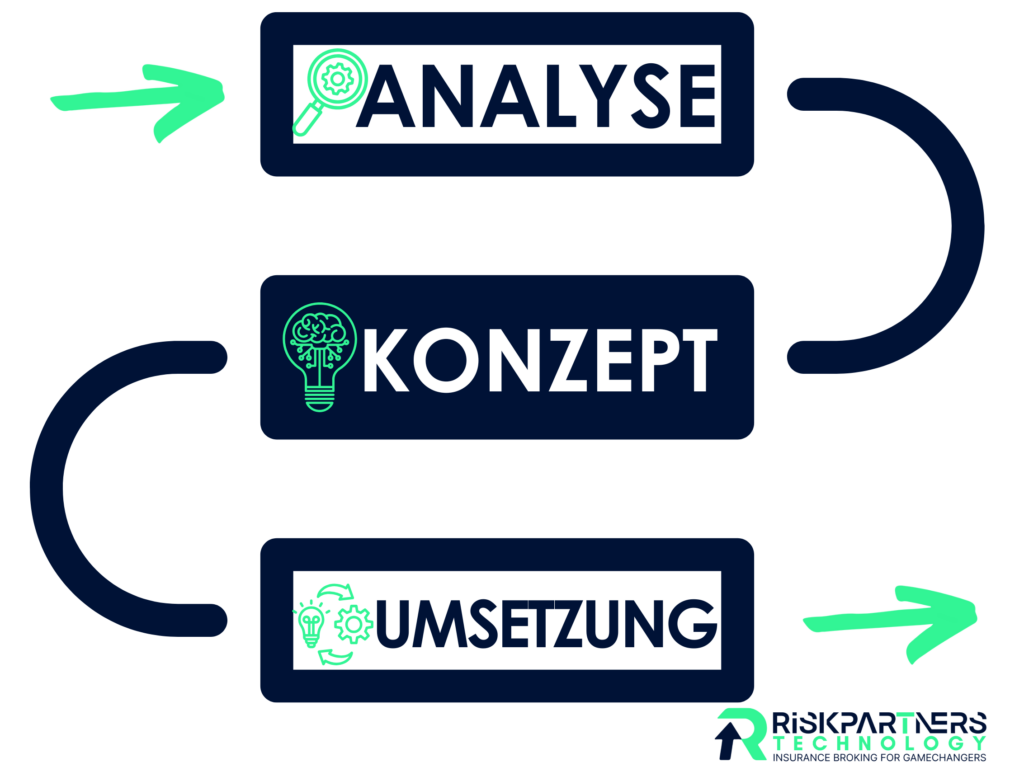
Through the detailed analysis of coverage gaps and the modeling of various scenarios, we were able to determine the optimal balance between cost reduction and risk appetite. This helped us to answer key strategic questions:
- Where are changed insurance limits required?
- Can an improvement be achieved by shifting the insurance solutions to other markets? (e.g. high sums insured in the USA to the German market)
- Would an alternative risk management approach be compatible with the overall strategy and risk appetite?
- Can the quality of the insurance program be achieved by redesigning existing policies?
The findings from our risk analysis were ultimately decisive for the design of the risk program of the merged company.
How we designed and implemented the insurance program
Based on the risk analysis, we were able to record and document the specific risks of the future company. We were also able to map the international orientation of the Group and the legal requirements for insurance cover and compulsory insurance in the countries in which subsidiaries are maintained in the concept and thus prepare the tenders on the insurance market.
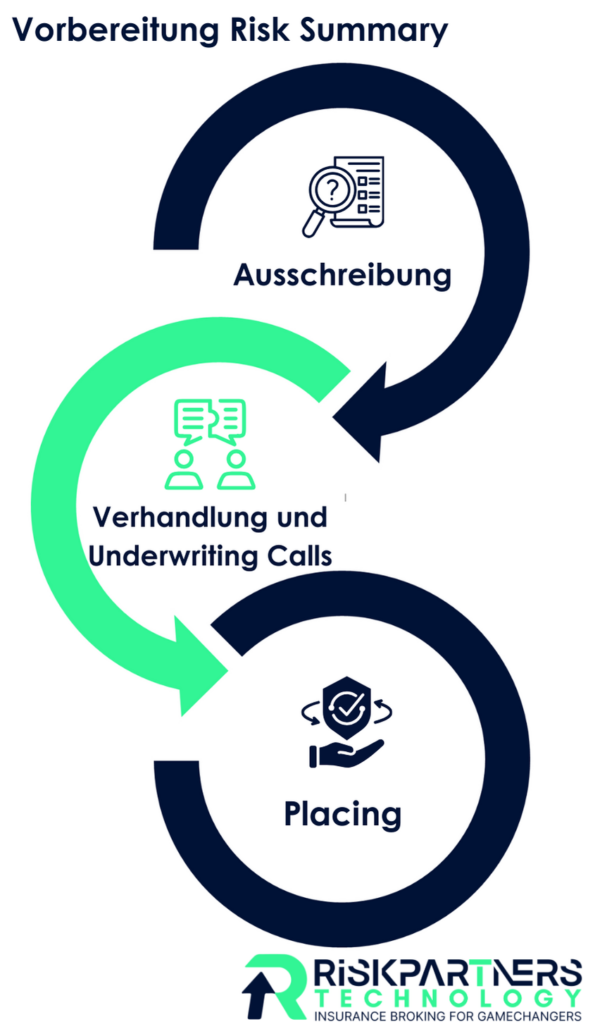
As the risks to be insured were complex, especially in liability (tech E&O), but also in cyber insurance and D&O, we prepared a risk exposé for the tender and sent it to the insurers in question. Market know-how and experience are particularly important here, as not every insurer underwrites all risks and it is particularly important at the beginning to pick up the underwriters and explain the risk clearly. After the tender and negotiations were completed, we arranged underwriting calls together with our client's management in order to clarify the final details and obtain binding offers from the insurers.
We were then able to summarize these binding offers in an overall concept for setting up the insurance program. It was also important to show the management clearly and concisely:
- What are the risks?
- How can they be insured?
- What are the benchmarks for other companies in terms of costs and sums insured?
After coordination, we placed the cover and sent all the necessary insurance confirmations so that all customers and business partners could receive confirmation of the necessary insurance cover before closing. In some cases, we were able to build on the companies' existing insurance policies and restructure them.
The insurance policies of the old companies had different terms. We drew up a project plan to merge the insurance policies for the client and implemented it over the course of the next year.
Results
Structured insurance program
- Structured insurance program that can be managed centrally.
- Utilization of the advantages of existing insurance programs through partial restructuring.
- Pre-negotiation of premium rates, adapted to the targeted growth.
Quality
Our service is consistently quality-oriented:
- Own wordings with market-leading conditions
- Individual negotiation of clauses for our clients for customized insurance cover
- Improvement of the overall insurance cover by coordinating the individual insurance policies with each other (e.g. cyber insurance and fidelity insurance)
Compliance
- Installation of relevant local policies in non-admitted countries
- Installation of compulsory insurance for foreign subsidiaries
- Achieving tax compliance through correct tax allocation
Cost savings
- Transfer of excesses in liability insurance from the US market to the German market
- Consolidation of cyber and D&O insurance
- Consolidation of insurance companies
- Standardized risk management in one place in management and thus significant reduction of insurance costs in (foreign) subsidiaries
Ultimately, we were able to realize savings of 24% in insurance costs for the client while improving the insurance cover at the same time. By working together on the risks, we were able to achieve further efficiency gains with the client, such as increasing some deductibles in order to filter out frequent claims and thus reduce the organizational effort on the client side.
As with all our services, we attach great importance to quality in both risk analysis and the implementation of international insurance programs, as well as the use of experienced specialists who help our clients to design their insurance programs optimally and sustainably.
YOU ARE STILL READING: